English
 简体中文
简体中文

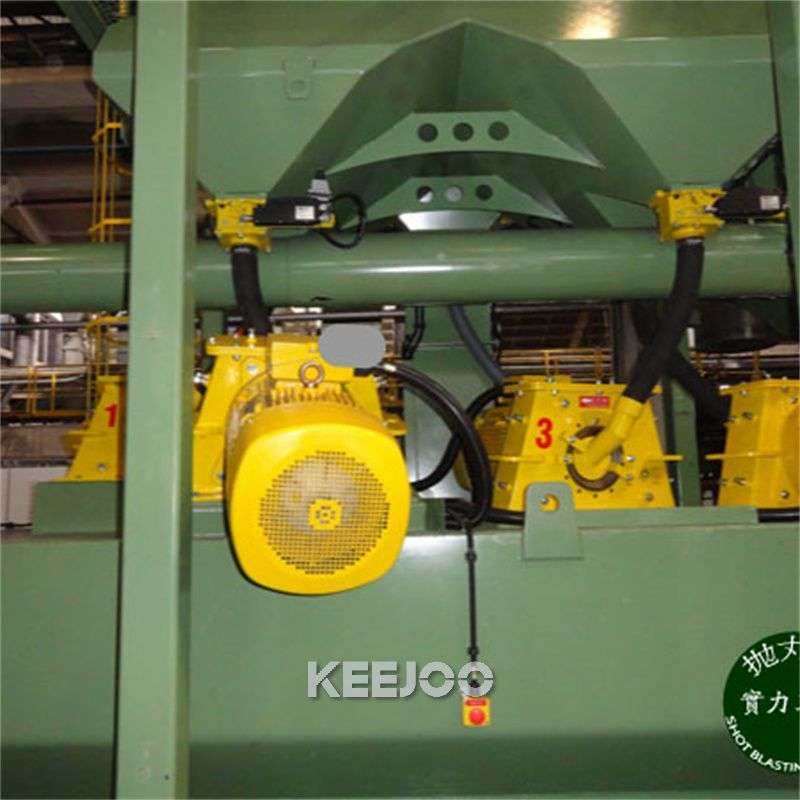
The shot blasting speed in a shot blasting machine depends primarily on the following key factors:
* **Motor rotation speed:** Adjusting the motor's power frequency via a variable frequency drive directly alters the rotation speed of the blast wheel impeller. Higher motor speeds generate greater centrifugal force acting on the shot, resulting in a higher shot blasting speed.
* **Blast wheel diameter:** At a constant motor speed, a larger blast wheel diameter results in a higher linear velocity of the shot at the blade tip, thereby increasing the shot blasting speed.
* **Control cage opening angle:** The control cage regulates the direction and concentration of the shot stream. A smaller opening angle produces a more concentrated shot path, reduces energy loss, and yields a relatively higher effective shot blasting speed; conversely, a larger opening angle causes shot dispersion, reducing the velocity of a portion of the shot.
* **Shot size and density (steel shot):** Although the shot itself does not directly determine the shot blasting speed, its mass (determined by size and material density) influences the kinetic energy acquired within the machine. Under identical power conditions, heavier projectiles may require higher impeller rotation speeds to achieve the same ejection velocity as smaller ones.
Additionally, the internal mechanical condition of the machine (e.g., the degree of blade wear) and the stability of the shot feed system (e.g., the uniformity of shot flow) indirectly affect the consistency and efficiency of the ejection velocity.