English
 Español

Shot velocity (i.e., the linear speed at which the shot exits the blast machine) is primarily regulated using the following methods, the most critical of which involve controlling the rotational speed and design parameters of the blast machine:
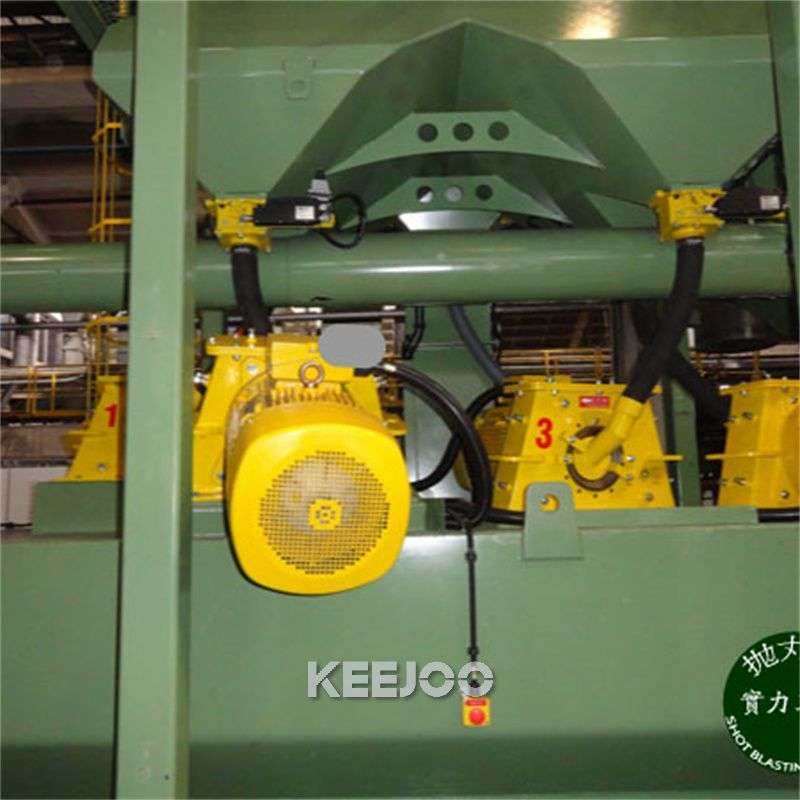
**Adjusting the blast machine motor's rotational speed:** This is the most direct and common method. Rotational speed is regulated by varying the frequency of the power supply to the motor driving the blast wheel (impeller) using a variable frequency drive (VFD). Higher motor speeds result in a higher linear velocity at the tip of the blast wheel and greater centrifugal force acting on the shot, ultimately leading to a higher shot velocity.
**Replacing the blast wheel with one of a different diameter:** At a constant motor speed, the diameter of the blast wheel (impeller) directly affects the linear velocity of the shot. A larger-diameter blast wheel, rotating at the same speed, generates a higher linear velocity at its tip, thereby achieving a higher shot velocity.
**Adjusting the control cage opening angle:** The control cage is located inside the blast machine, and its opening angle determines the direction and concentration of the shot as it exits the impeller. Reducing the control cage opening angle can concentrate the shot trajectory and minimize energy dispersion, thereby increasing the effective shot velocity to some extent. Conversely, increasing the opening angle widens the dispersion pattern, potentially reducing the velocity of individual shot particles.
**Controlling shot feed:** Although the shot feed rate (blast volume) primarily affects impact density, an excessive flow of shot can lead to internal clogging or excessive energy dispersion, indirectly influencing the acceleration and final velocity of individual shot particles. Therefore, optimizing the shot feed valve opening and the screw conveyor speed to ensure a stable and adequate feed rate helps maintain the target blast velocity.
Ultimately, regulating the blast velocity involves controlling the impeller's rotational speed and size. In practice, this process typically combines considerations of the workpiece material, shape, and processing requirements (such as descaling, strengthening, or cleaning)—guided by equipment manuals or industry experience—with precise motor speed adjustment via a variable frequency drive and fine-tuning of the control cage angle to achieve optimal processing results.