English
 Español

**Incorrect Material Chemical Composition:** Excessive levels of elements such as silicon (Si) and iron (Fe) in aluminum alloys can easily lead to the formation of excess intermetallic phases or lamellar structures, resulting in a porous surface structure. High levels of magnesium (Mg), manganese (Mn), or zinc (Zn) can promote the formation of hard, brittle phases, while a deficiency in copper (Cu) reduces surface strength, making the part prone to delamination during shot blasting. Furthermore, an excessively high proportion of remelted scrap material (≥50%) degrades the alloy's mechanical properties and increases the risk of porosity and impurity inclusions.
**Mold Design Defects:** Improper gating system design—such as making the runner cross-section wider than the sprue cross-section, or creating opposing melt flow fronts—can trigger air entrapment or turbulence, leading to pore formation in the part's thin surface layers. An inefficient ventilation system or cooling system malfunctions (e.g., localized zones with excessively low temperatures) can easily lead to defects such as "cold shuts" or flow marks (laps), resulting in a loose or porous material structure.
**Factors related to die-casting process parameters**
**Injection parameter issues:** Misalignment of the injection axis relative to the center, insufficient plunger stroke during the high-speed injection phase, or inadequate injection pressure can lead to incomplete mold cavity filling, thereby weakening the bond between the surface layer and the part's core. Low aluminum melt temperatures (caused by excessive holding time in the ladle or low temperatures in the shot sleeve), as well as abnormal mold temperatures (localized overcooled or overheated zones), can easily result in "cold shuts" or the formation of layered oxide inclusions.
**Improper use of release agents:** Excessive concentration, over-application, or incomplete drying of the release agent can introduce moisture or oil residues into the aluminum melt; this promotes the formation of an oxide layer at the interface, significantly reducing bond strength. **Shot blasting process and post-processing factors**
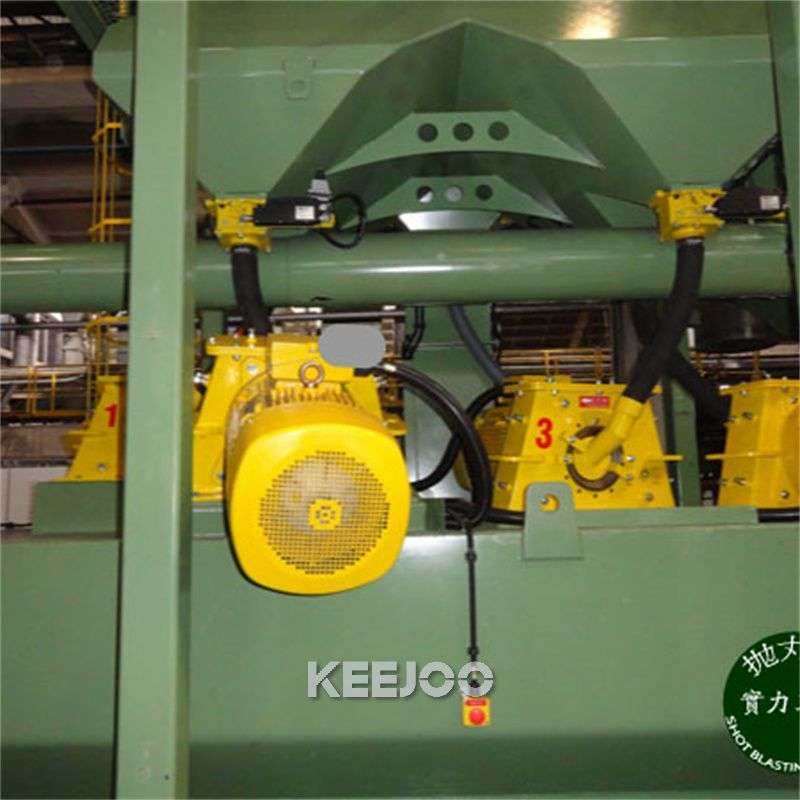
**Incorrect shot blasting parameters:** Excessive processing speed, prolonged exposure, excessively high shot feed intensity, or non-uniform shot size (specifically, the presence of oversized particles) can generate excessive impact loads, causing the dense surface layer to delaminate. **Issues during flash removal and grinding:** Incomplete removal of flash and excess material—or, conversely, excessive grinding that removes the dense surface layer—renders the part highly susceptible to coating delamination during subsequent shot blasting.