English
 Español

Three key approaches are used to reduce noise in shot-blasting equipment: optimizing equipment design, adjusting technological processes, and implementing sound insulation measures.
**Managing the Sound Source**
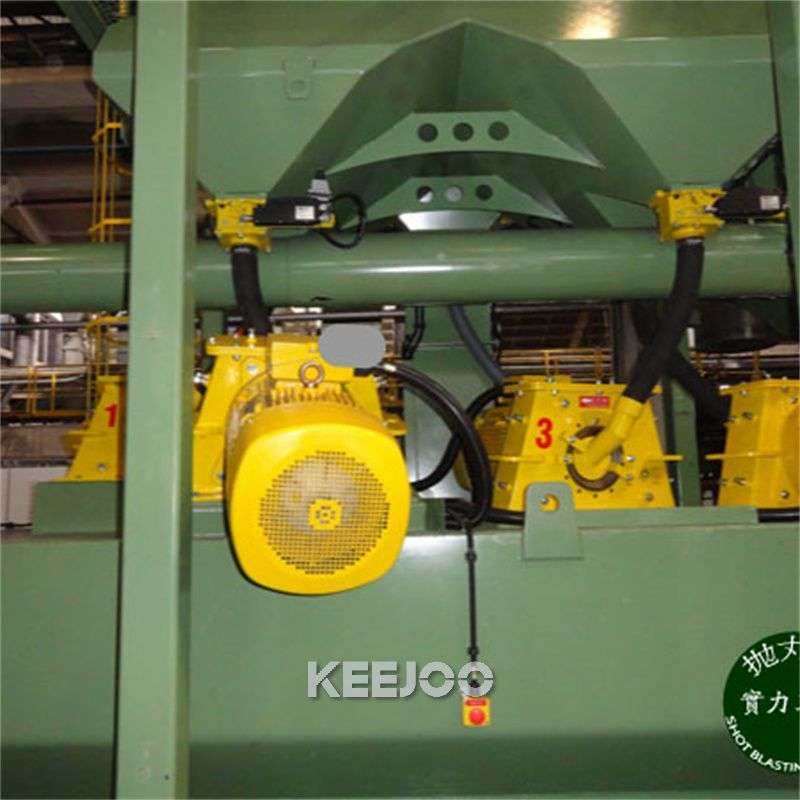
* **Impeller system improvements:** Using precision dynamic balancing (e.g., upgrading the dynamic balance grade from G6.3 to G2.5) can reduce vibration-induced noise by 15–20 dB. Replacing the standard impeller component with a polyurethane shot distributor further absorbs impact vibration.
* **Improving the shot flow path:** Installing rubber lining (12 mm thick or greater) inside the blast chamber. Corrugated wear-resistant rubber lining absorbs 30% more impact energy than flat lining.
* **Enhancing the motor vibration reduction system:** Using a permanent magnet synchronous motor instead of a traditional induction motor, combined with an elastic mount and ydraulic shock absorbers, can reduce electromagnetic noise by 18%.
**Blocking Noise Transmission Paths**
* **Modular sound-insulating enclosure:** A double-layer steel panel design (1.5 mm + 2 mm) with a 50 mm mineral wool core, combined with labyrinth-style sealing strips, reduces airborne noise transmission by more than 25 dB.
* **Use of a silencer:** An impedance composite silencer (featuring a micro-perforated plate and stainless steel casing) is installed at the dust extraction system outlet, providing an insertion loss of up to 30 dB. Process Parameter Optimization
Shot mix adjustment: a 7:3 mixture of steel shot and angular steel grit reduces noise levels by 8 dB compared to using pure steel shot. Particle size is controlled within the 0.8–1.2 mm range to minimize air turbulence.
Impact angle control: Computational Fluid Dynamics (CFD) modeling is used to reduce noise reflected from the workpiece. Regularly inspect blades, impellers, and other high-wear components for signs of wear, and replace damaged parts promptly to prevent abnormal noise and performance degradation.