Español
 简体中文
简体中文

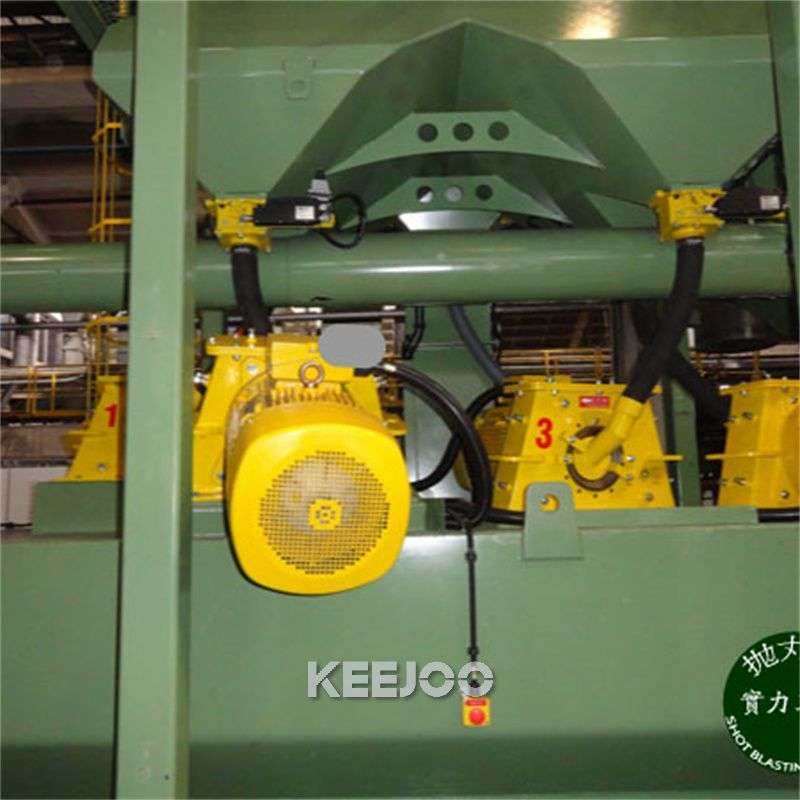
The intensity of the shot blasting process can be modified by adjusting several parameters, including the hardness and size of the steel shot and grit, the blasting velocity, the projection angle, and the machine's operating settings.
"Adjust the hardness of the steel shot and grit." The hardness of the media should be selected based on the hardness of the workpiece to ensure optimal impact performance. If the hardness is too high, the media will fracture easily; if it is too low, the impact effect will be poor, potentially increasing processing time and costs. Therefore, selecting media within the appropriate hardness range is crucial.
"Control the blasting velocity." The velocity directly affects the blasting intensity. Excessive velocity can lead to increased media breakdown, so it must be controlled within appropriate limits.
"Adjust the size of the steel shot and grit": Selecting the appropriate diameter ensures cleaning efficiency and accommodates the workpiece's geometry. For instance, if the workpiece has grooves, the media diameter must be less than half the radius of the groove's inner curvature.
"Adjust the blasting angle": Maintain the stream of steel shot and grit perpendicular to the workpiece to achieve maximum blasting intensity. If the workpiece shape necessitates blasting at a shallow angle, the size and velocity of the media should be increased accordingly. "Adjustment of operating parameters": this encompasses the adjustment of shot blasting speed, cleaning effect, cleaning duration, discharge rate, etc. Depending on the requirements of the workpiece, this is achieved by replacing the blade, adjusting the flow rate of the shot blasting medium, or modifying the injection angle.
Thus, through the comprehensive application of the aforementioned methods, the intensity of the shot blasting process can be effectively regulated and controlled to achieve optimal cleaning results and production efficiency.